From Fragmented Lending to a Multi-Sided Financial Platform Driving $40M+ in Disbursements
From Fragmented Lending to a Multi-Sided Financial Platform Driving $40M+ in Disbursements
project type
project type
Product
stage
2024 - present
Deliverables
Product Strategy, Product Design
Summary
Summary
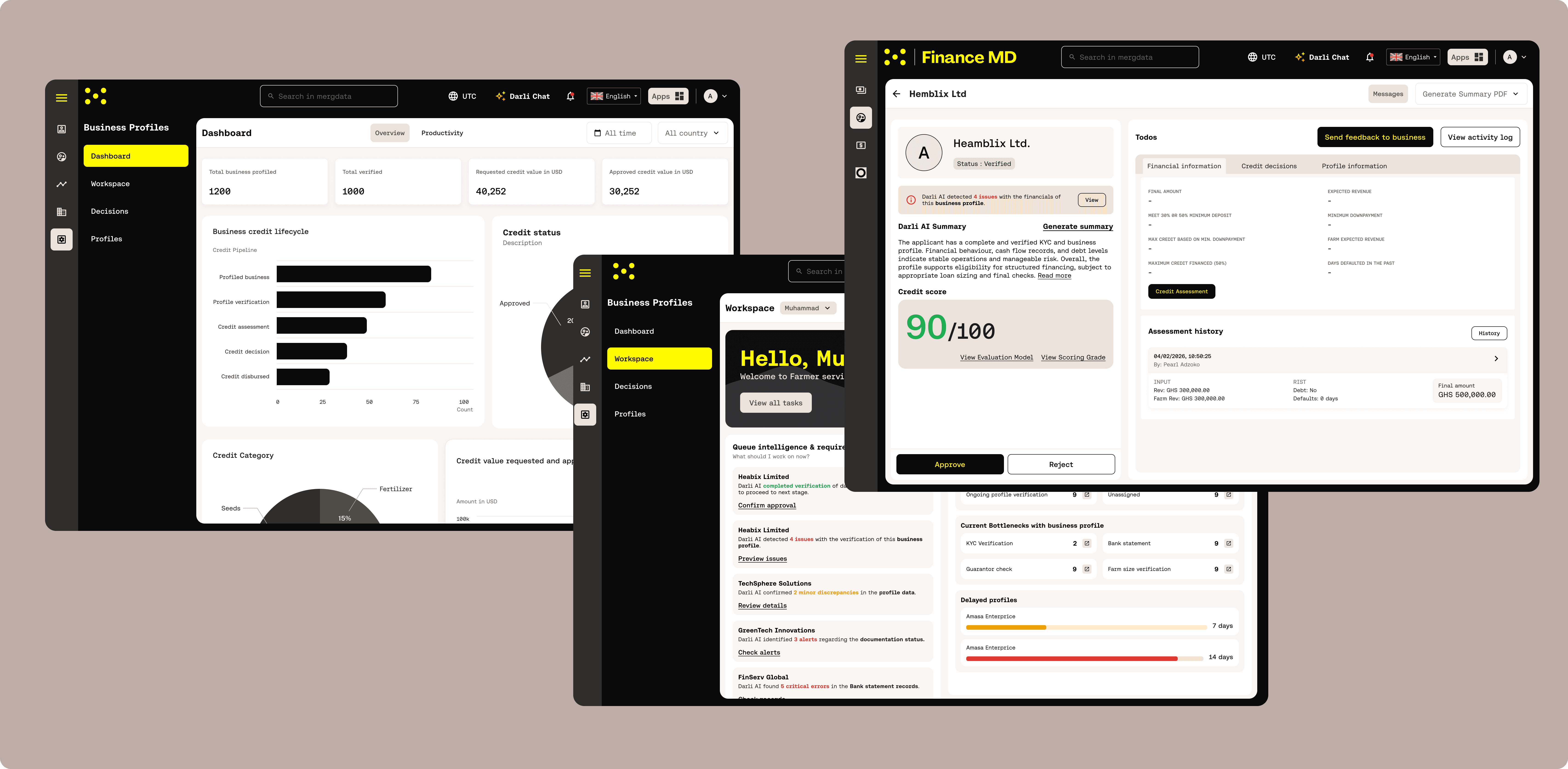
This case study shows how I redesigned a multi-stakeholder workflow to bring transparency, accountability, and speed to agricultural credit access. The platform connects smallholder farmers to financial institutions across West Africa, improving access to credit for underserved agricultural businesses through structured, transparent lending.
This case study shows how I redesigned a multi-stakeholder workflow to bring transparency, accountability, and speed to agricultural credit access. The platform connects smallholder farmers to financial institutions across West Africa, improving access to credit for underserved agricultural businesses through structured, transparent lending.
Role
Product Designer
Duration
6 months
Year
2025-2026
The Platform
The Platform
Financial Workflow Platform
Financial Workflow Platform
A digital infrastructure connecting smallholder farmers to financial institutions across West Africa
A digital infrastructure connecting smallholder farmers to financial institutions across West Africa
Multi-Stakeholder System
Multi-Stakeholder System
Farmers, field agents, loan officers, and credit committees all interact within the same ecosystem
Farmers, field agents, loan officers, and credit committees all interact within the same ecosystem
Core Mission
Core Mission
Improve access to credit for underserved agricultural businesses through structured, transparent lending
Improve access to credit for underserved agricultural businesses through structured, transparent lending
Discovery & Problem Analysis
Discovery & Problem Analysis
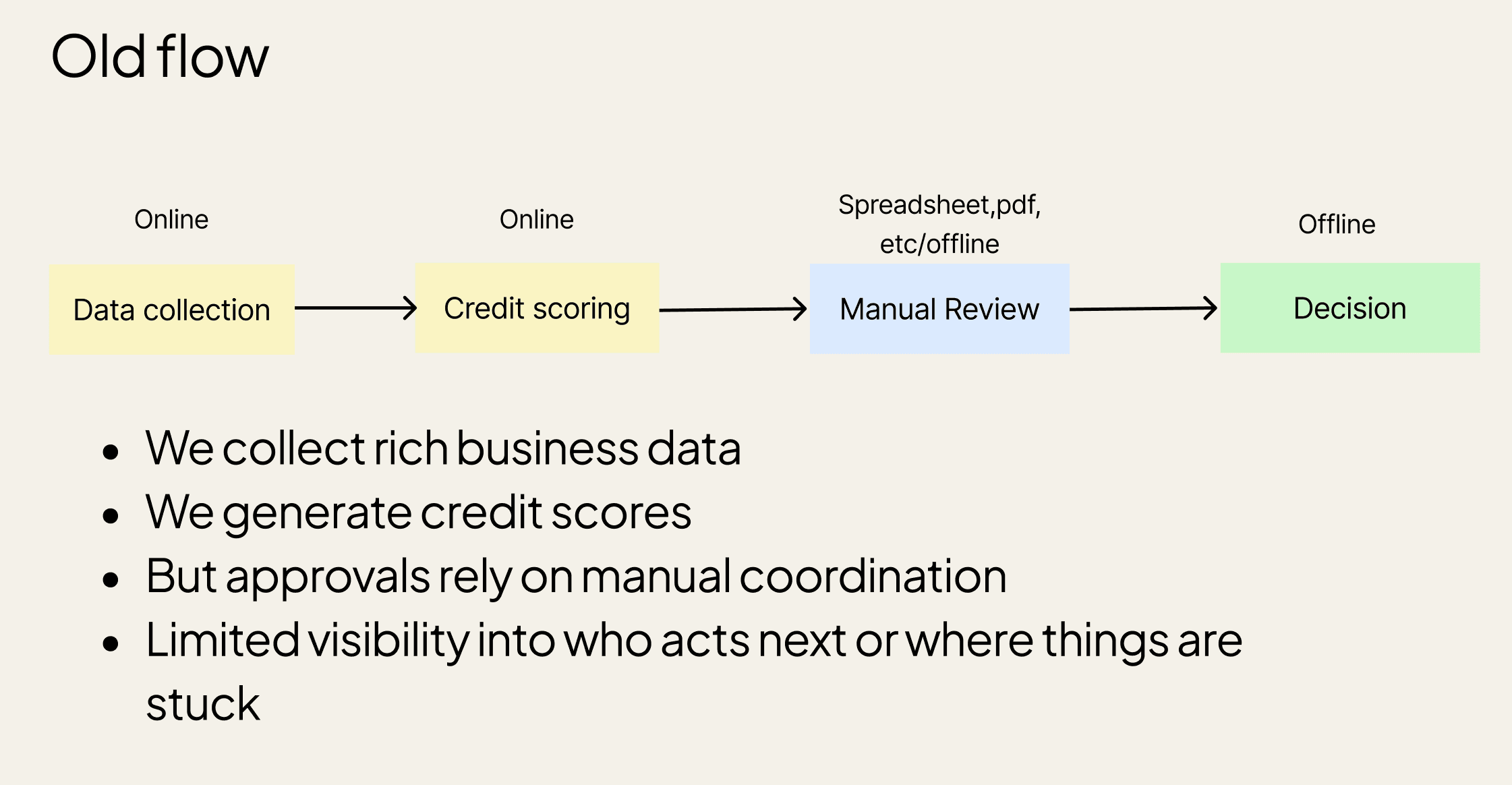
The lending process was fragmented across farmers, field agents, and financial institutions, with each stakeholder operating in isolation. This created delays, poor visibility, and weak accountability across the loan lifecycle. To understand the problem, I analyzed how loans moved from data collection to approval and recovery.
Reviewed existing workflows — manual data collection and offline risk reviews created disconnected processes
Mapped the loan lifecycle — uncovered bottlenecks, delays, and broken handoffs
Identified key pain points — long decision times, no status visibility, and difficult document tracking
Analyzed documentation flow — spreadsheets and PDFs made tracking inconsistent
Conducted stakeholder interviews — spoke with loan officers, agents, and operations teams to validate findings
The lending process was fragmented across farmers, field agents, and financial institutions, with each stakeholder operating in isolation. This created delays, poor visibility, and weak accountability across the loan lifecycle. To understand the problem, I analyzed how loans moved from data collection to approval and recovery.
Reviewed existing workflows — manual data collection and offline risk reviews created disconnected processes
Mapped the loan lifecycle — uncovered bottlenecks, delays, and broken handoffs
Identified key pain points — long decision times, no status visibility, and difficult document tracking
Analyzed documentation flow — spreadsheets and PDFs made tracking inconsistent
Conducted stakeholder interviews — spoke with loan officers, agents, and operations teams to validate findings
Key Friction Areas
Key Friction Areas
From this analysis, three core issues stood out:
Unclear decision communication — stakeholders lacked clarity on outcomes and next steps
Fragmented documentation — files were scattered across multiple tools
No accountability tracking — no clear ownership across workflow stages
From this analysis, three core issues stood out:
Unclear decision communication — stakeholders lacked clarity on outcomes and next steps
Fragmented documentation — files were scattered across multiple tools
No accountability tracking — no clear ownership across workflow stages
My Role: End-to-End Workflow Design
My Role: End-to-End Workflow Design
I led the design of the lending workflow, focusing on creating a clear, structured system that improved transparency and usability for all stakeholders.
Defined information architecture — organized the process into clear stages
Designed interactions & UI — simplified complex workflows into intuitive flows
Tested and iterated — refined the experience based on user feedback
I led the design of the lending workflow, focusing on creating a clear, structured system that improved transparency and usability for all stakeholders.
Defined information architecture — organized the process into clear stages
Designed interactions & UI — simplified complex workflows into intuitive flows
Tested and iterated — refined the experience based on user feedback
Solution Design: Creating a Transparent, Intelligent Lending Workflow
Solution Design: Creating a Transparent, Intelligent Lending Workflow
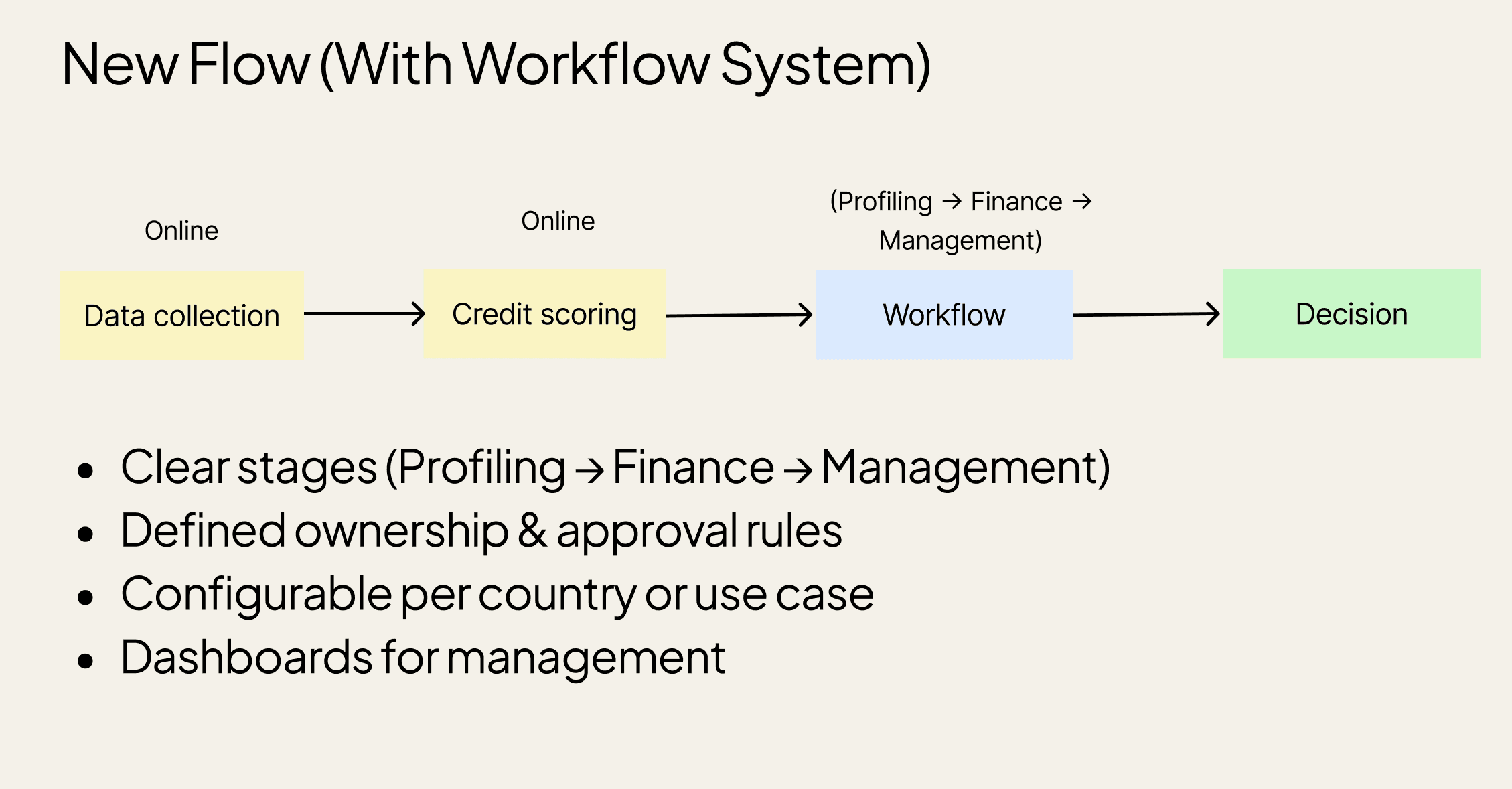
To solve the fragmentation in the lending process, I focused on designing a system that brings clarity to each stage, guides user actions, and makes issues visible early. The goal was not just to digitize the workflow, but to make it easier for every stakeholder to understand what’s happening, what needs to be done, and where attention is required.
To solve the fragmentation in the lending process, I focused on designing a system that brings clarity to each stage, guides user actions, and makes issues visible early. The goal was not just to digitize the workflow, but to make it easier for every stakeholder to understand what’s happening, what needs to be done, and where attention is required.
Centralized dashboard for system-wide visibility
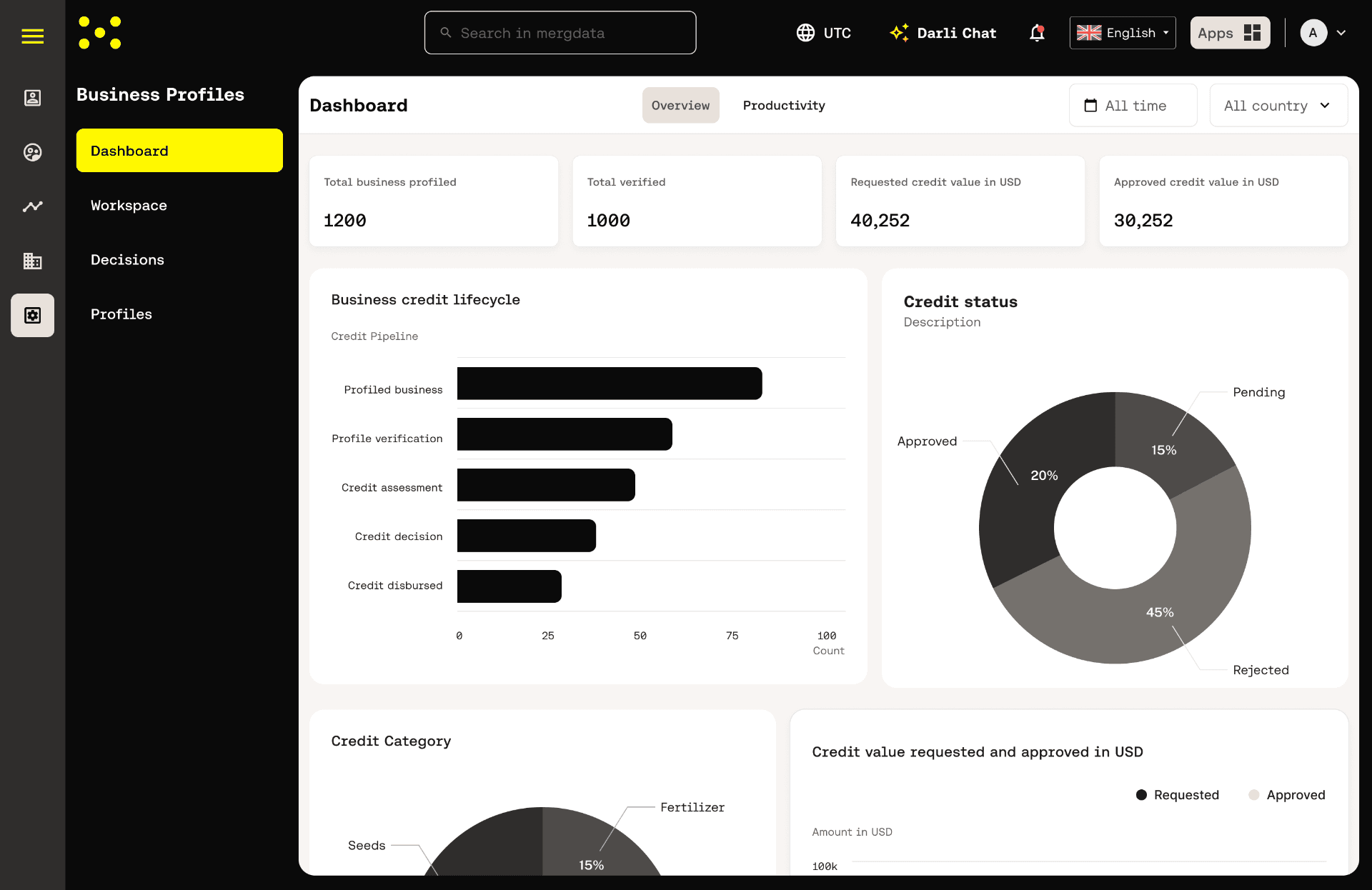
I designed a high-level dashboard that gives management a real-time view of the entire loan pipeline, making it easy to track progress, identify issues, and understand what’s happening across all stages.
I designed a high-level dashboard that gives management a real-time view of the entire loan pipeline, making it easy to track progress, identify issues, and understand what’s happening across all stages.
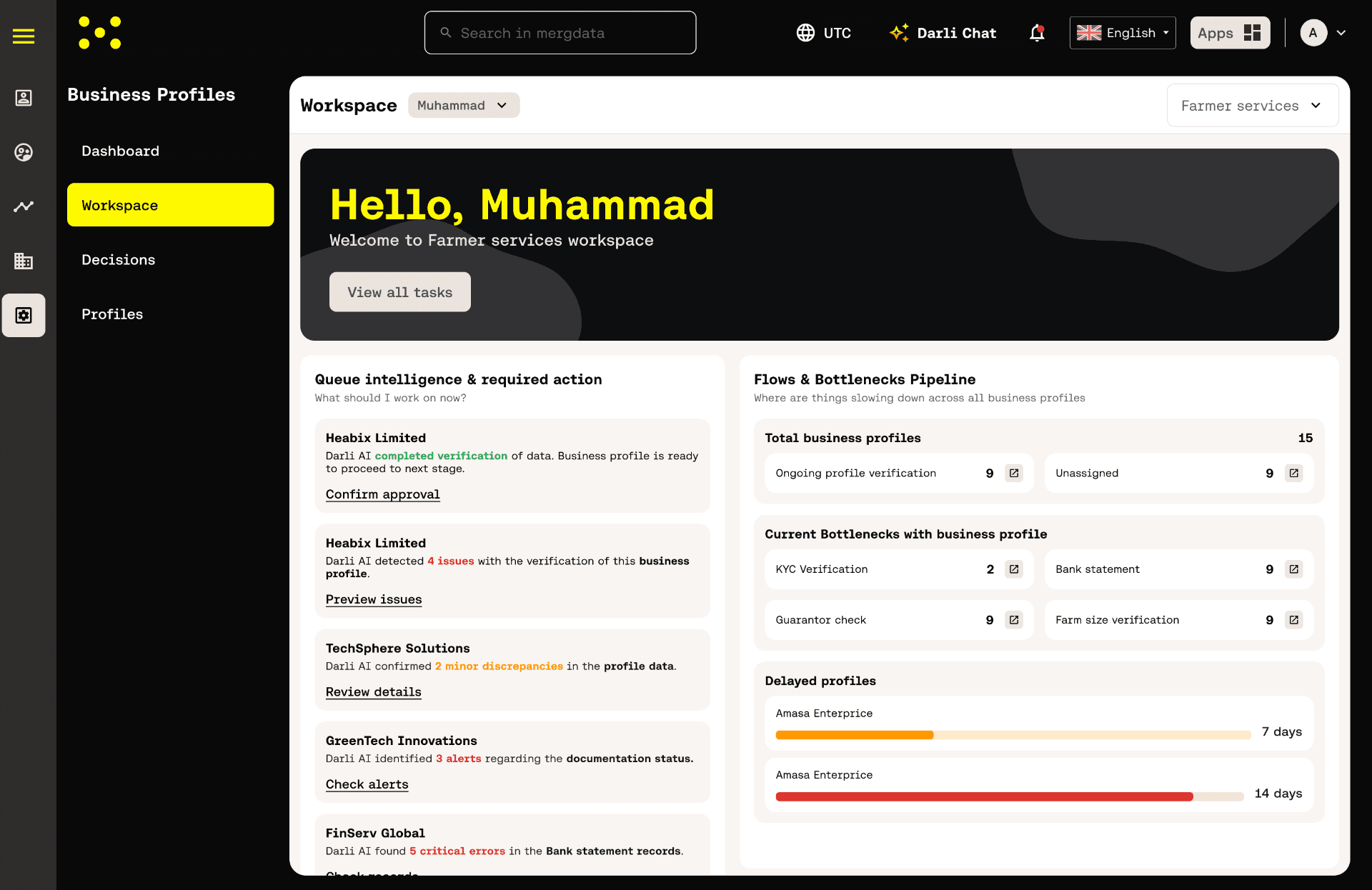
Role-based workspaces with intelligent task management
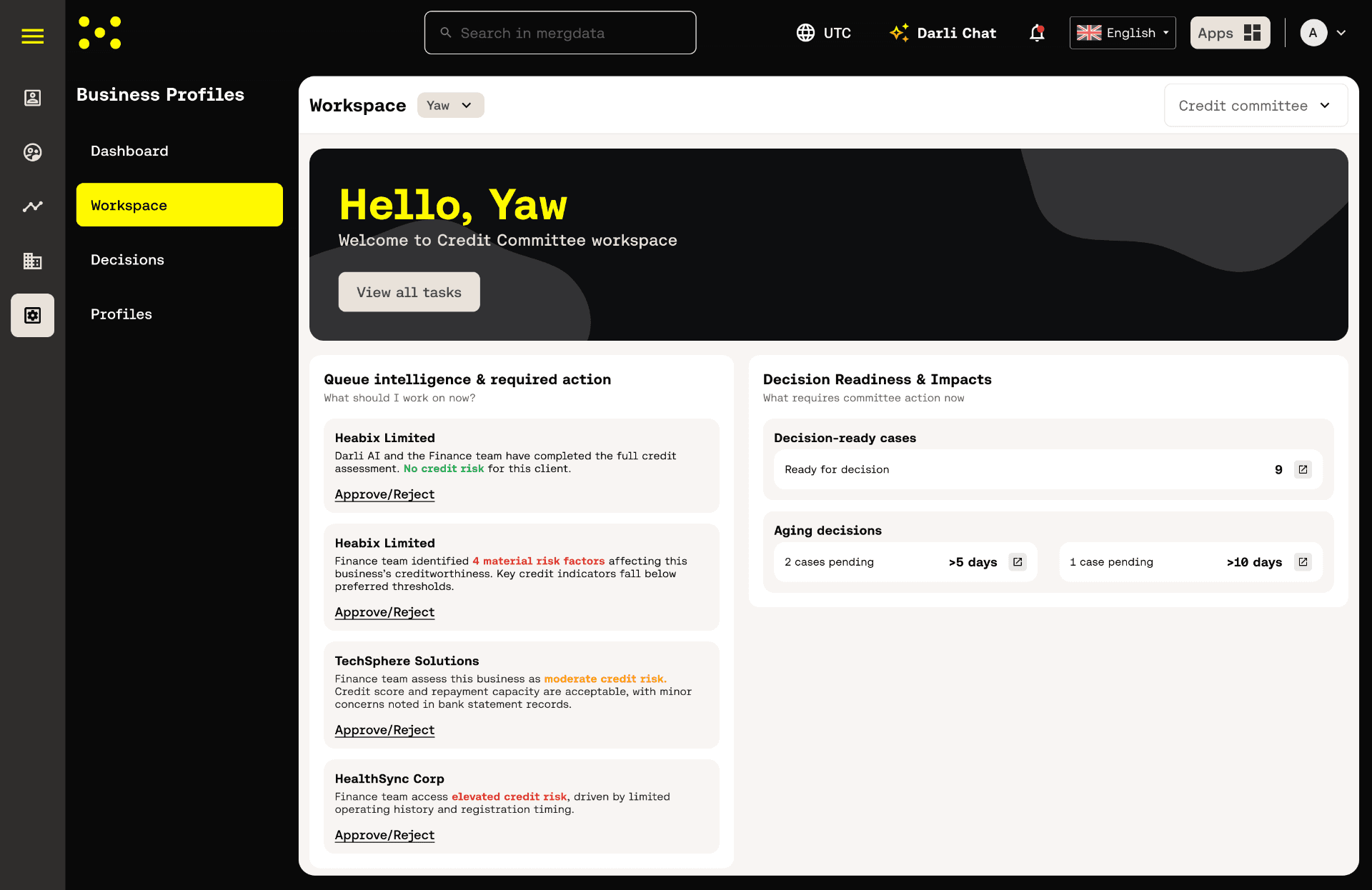
Each stakeholder farmer services, finance team, and credit committees has a personalized workspace showing exactly what they need to act on. This includes AI-powered queues that prioritize critical tasks and highlight delays and bottlenecks within each stage.
Each stakeholder farmer services, finance team, and credit committees has a personalized workspace showing exactly what they need to act on. This includes AI-powered queues that prioritize critical tasks and highlight delays and bottlenecks within each stage.
Role-based workspaces with intelligent task management
Each stakeholder farmer services, finance team, and credit committees has a personalized workspace showing exactly what they need to act on. This includes AI-powered queues that prioritize critical tasks and highlight delays and bottlenecks within each stage.
Each stakeholder farmer services, finance team, and credit committees has a personalized workspace showing exactly what they need to act on. This includes AI-powered queues that prioritize critical tasks and highlight delays and bottlenecks within each stage.
Structured approval flow across stages
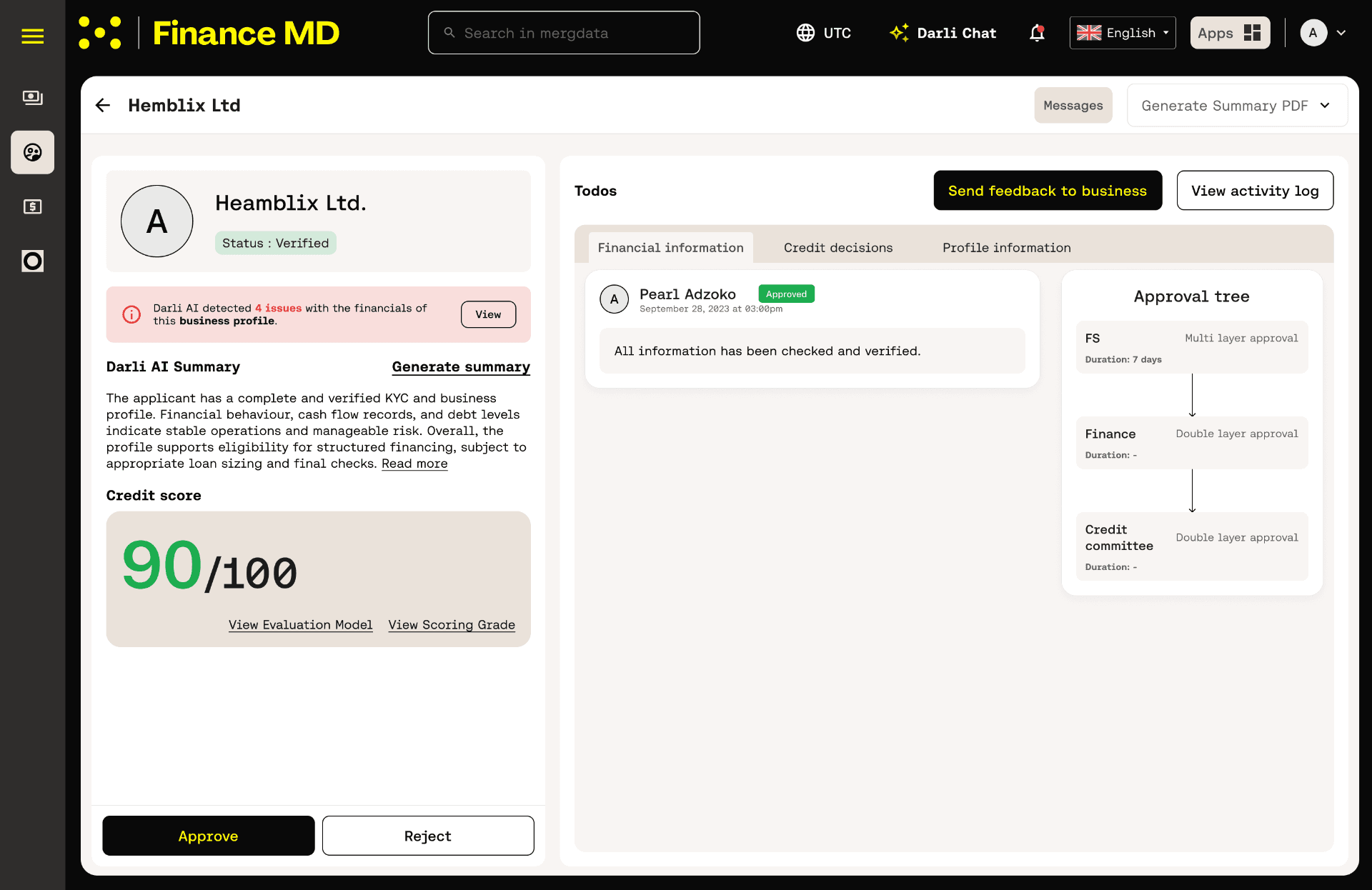
I designed a clear, multi-step approval system that moves applications seamlessly from one stage to the next, with defined ownership and visibility at each step to reduce confusion and delays.
I designed a clear, multi-step approval system that moves applications seamlessly from one stage to the next, with defined ownership and visibility at each step to reduce confusion and delays.
AI-powered profile summaries for faster decisions
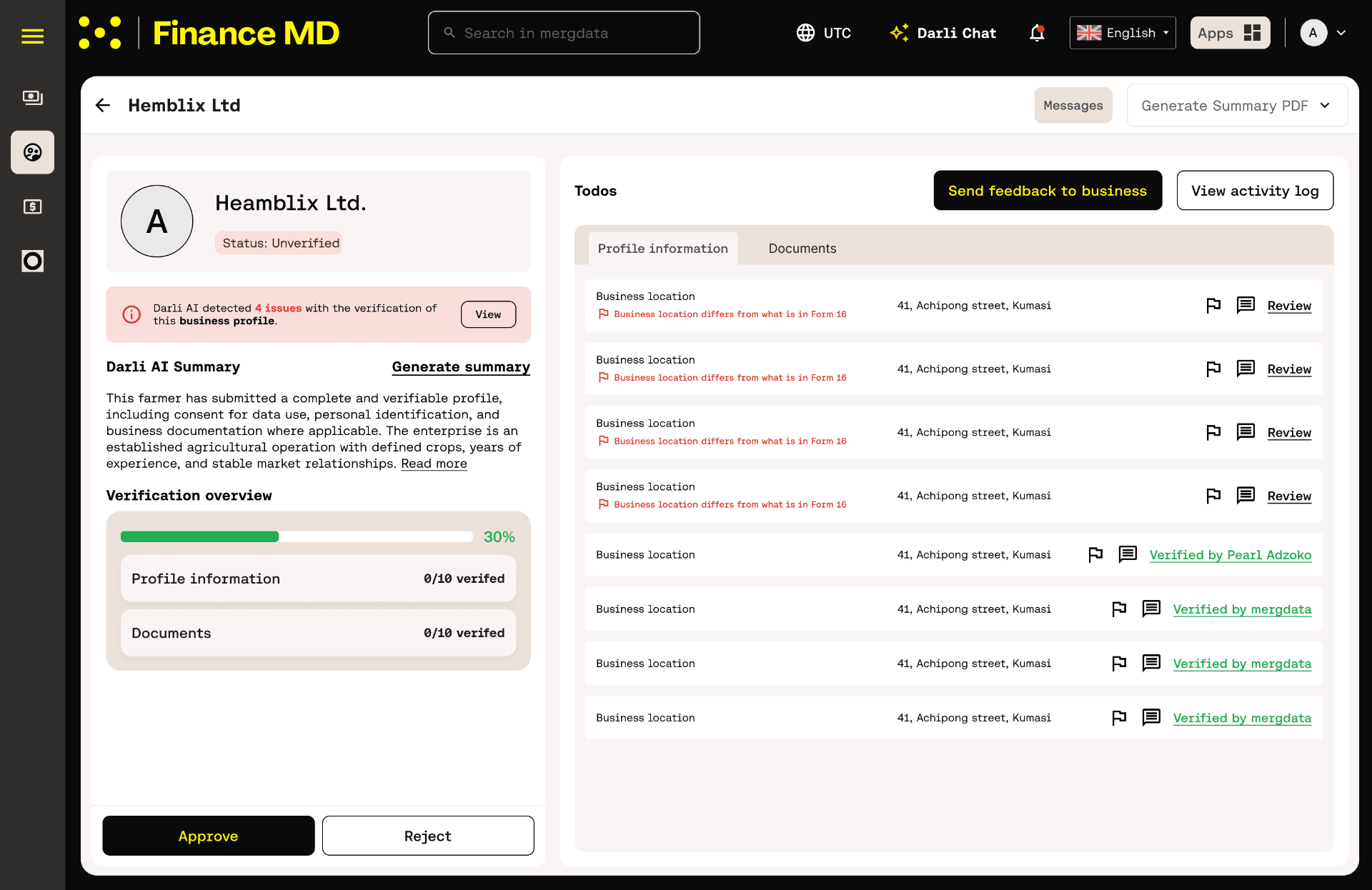
Each farmer profile includes a stage-specific AI summary, highlighting verification status, required checks, and key assessment insights, enabling users to quickly understand and act on applications.
Each farmer profile includes a stage-specific AI summary, highlighting verification status, required checks, and key assessment insights, enabling users to quickly understand and act on applications.
Impact: Improving Financial Access and Decision-Making at Scale
Impact: Improving Financial Access and Decision-Making at Scale
The redesigned system transformed how loans are processed, reviewed, and managed across stakeholders. By improving visibility, structuring workflows, and guiding decision-making, the platform delivered measurable outcomes for both financial institutions and the farmers they serve.
The redesigned system transformed how loans are processed, reviewed, and managed across stakeholders. By improving visibility, structuring workflows, and guiding decision-making, the platform delivered measurable outcomes for both financial institutions and the farmers they serve.
Supported $40M+ in loan disbursements
Enabled financial institutions to confidently scale lending operations through improved transparency and structured workflows.
Enabled financial institutions to confidently scale lending operations through improved transparency and structured workflows.
Achieved a 96% recovery rate
Improved accountability and decision clarity across the loan lifecycle, reducing default risk and strengthening portfolio performance.
Improved accountability and decision clarity across the loan lifecycle, reducing default risk and strengthening portfolio performance.
Reduced operational delays and bottlenecks
Centralized visibility and role-based workspaces helped teams identify and resolve issues earlier, accelerating loan processing timelines.
Centralized visibility and role-based workspaces helped teams identify and resolve issues earlier, accelerating loan processing timelines.
Improved decision-making across stakeholders
AI-powered summaries and structured workflows provided clear context, enabling faster and more consistent credit decisions.
AI-powered summaries and structured workflows provided clear context, enabling faster and more consistent credit decisions.
Strengthened coordination across teams
Shared visibility, communication tools, and clear ownership improved alignment between agents, credit officers, and committees.
Shared visibility, communication tools, and clear ownership improved alignment between agents, credit officers, and committees.